The complete guide
What is sound healing?
Sound baths, sound therapy and vibrational healing, explained plainly. What actually happens, what the evidence says, and what to expect from your first session in Melbourne.

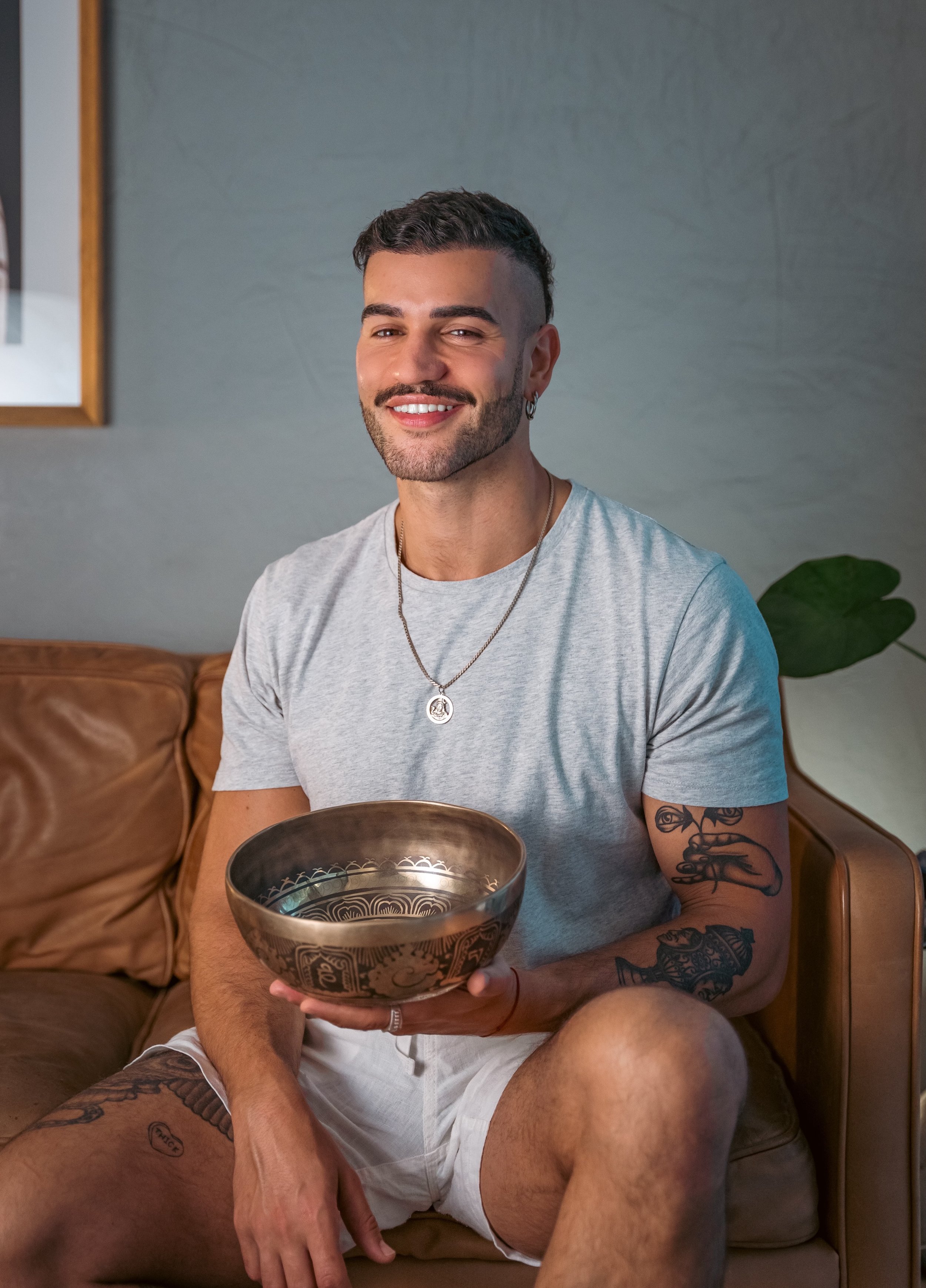 Written by Ange MonittoFounder, Sound of Soma · Windsor, MelbourneAnge healed his own undiagnosed chronic illness through sound after Western medicine ran out of answers. Read his story.
The short answer
What is sound healing?
Sound healing is a practice where instruments such as crystal and Himalayan singing bowls, gongs, chimes and voice are played around and on the body. The vibration slows your breathing and heart rate, moves your nervous system out of fight-or-flight and into its rest state, and gives the body a chance to release tension it has been holding. You lie down, you do nothing, and the sound does the work.
You will also see it called sound therapy, vibrational healing or sound bath meditation. Those names describe the same underlying thing from different angles: sound therapy leans clinical, vibrational healing leans energetic, and sound bath meditation describes the group class most people actually experience.
It is not religious, and it does not require you to believe in anything for it to work on you. The mechanism is physical rather than mystical, and most people at their first session have never meditated in their life.
The most common format
What is a sound bath?
A sound bath, often called a sound bath meditation, is a group class where you lie down on a mat, under a blanket, and are bathed in sound for an hour. Nobody touches you, nothing is asked of you, and there is nothing to learn.
The word bath is doing real work in that name. Sound waves are pressure waves, and your body is roughly 70% water, which carries sound around four times faster than air does. So you are not only listening to the bowls. You are inside the vibration they make.
Sound bath versus sound healing: sound healing is the whole practice. A sound bath is its most common format. Every sound bath is sound healing, but sound healing also includes one-to-one sessions and targeted frequency work.
Classes run every day in Windsor, Melbourne. From $35, everything provided.
Book a sound bathStart with what you already accept
You are already surrounded by frequencies you cannot sense
Your wifi router is broadcasting at 2.4 and 5 gigahertz right now. Your phone is talking to a tower somewhere between 700 megahertz and 3.5 gigahertz. A microwave cooks at 2.45 gigahertz. You cannot see, hear, taste or feel any of it, and you have never once doubted that it is real, because your phone works.
Nobody calls wifi mystical. It is simply a frequency doing physical work in a range your senses do not cover.
An honest distinction, because it matters. Wifi and mobile signals are electromagnetic waves. They travel through a vacuum and need nothing to carry them. Sound is different in kind: it is a mechanical pressure wave that has to move through something, which is why there is no sound in space. Anyone telling you sound and wifi are the same thing is overselling it.
But here is why the comparison is still worth making. Your body has no organ for receiving 5 gigahertz. It has an exquisite one for receiving mechanical vibration, developed before you were born and refined over millions of years. Where wifi passes through you unnoticed, sound is a frequency your body is specifically built to feel.
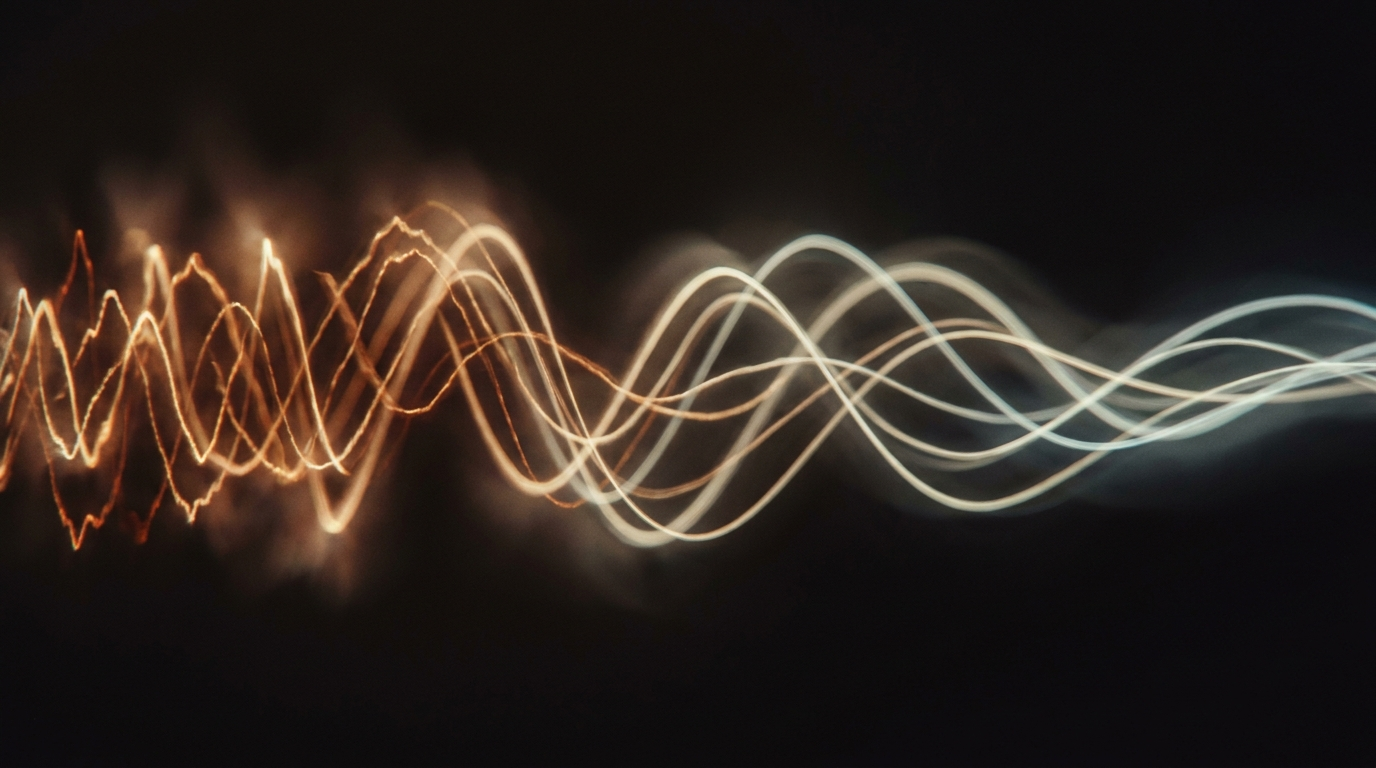
Human hearing runs roughly 20 Hz to 20,000 Hz. A gong and a large Himalayan bowl produce a great deal of energy at the very bottom of that range and below it, which is why people describe a sound bath as something they felt in the chest and the belly rather than only heard.
The mechanism
How sound healing actually works
Two things are happening at once, and neither needs you to believe in anything. This is the part of sound therapy that is best understood.
Your nervous system changes gear. Chronic stress leaves you stuck in the sympathetic state: stress hormones up, muscles braced, digestion paused. Slow, sustained, low frequency is read by the body as a safety signal, and it shifts you into the parasympathetic state where repair, digestion and deep sleep happen.
Your brainwaves slow down. Your brain runs on measurable electrical rhythm, grouped into bands. All of them are present all the time. What changes is which one dominates.
- Gamma39 to 42 HzHeightened perception, peak focus and insight.
- Beta13 to 38 HzAlert, thinking, problem solving. Normal waking mind, and where stress keeps you.
- Alpha8 to 12 HzDeeply relaxed but awake. Light meditation, and the doorway a sound bath opens.
- Theta4 to 7 HzDreamlike and deeply meditative. The twilight between waking and sleep.
- Delta1 to 3 HzDeep, dreamless sleep. Where physical repair happens.
A busy day is Beta. A sound bath walks you down into Alpha and Theta while you are still awake, which is why the sleep that night is so often the deepest in weeks: your system has already made the trip once.
The part you cannot resist
Entrainment, and why it works without you trying
Everything has a natural resonant frequency. Expose an object to a vibration at or close to that frequency and it will resonate with it. Through resonance, a comparatively weak vibration in one object can produce a strong vibration in another, and the two transfer energy until they fall into step.
That is entrainment, and you have experienced it your whole life without naming it. It is why your breathing slows to match slow music. It is why a room full of people gradually breathes together. It is why a fast track makes you walk faster without deciding to.
In a session, sustained low frequency gives your brain a slow, steady external rhythm to sync toward. You do not have to concentrate. You also cannot really refuse, which is precisely why sound healing works on people who have tried meditation and concluded they are bad at it.
The longer version, with the research, is in the science of a sound bath.
Sound made visible
Cymatics: what sound does to matter
Cymatics is the study of visible sound. Scatter sand, water or fine beads on a plate, run a frequency through it, and the material stops being random. It organises into symmetrical, repeating geometry. Change the frequency and the pattern reorganises into a different one, instantly and reliably.
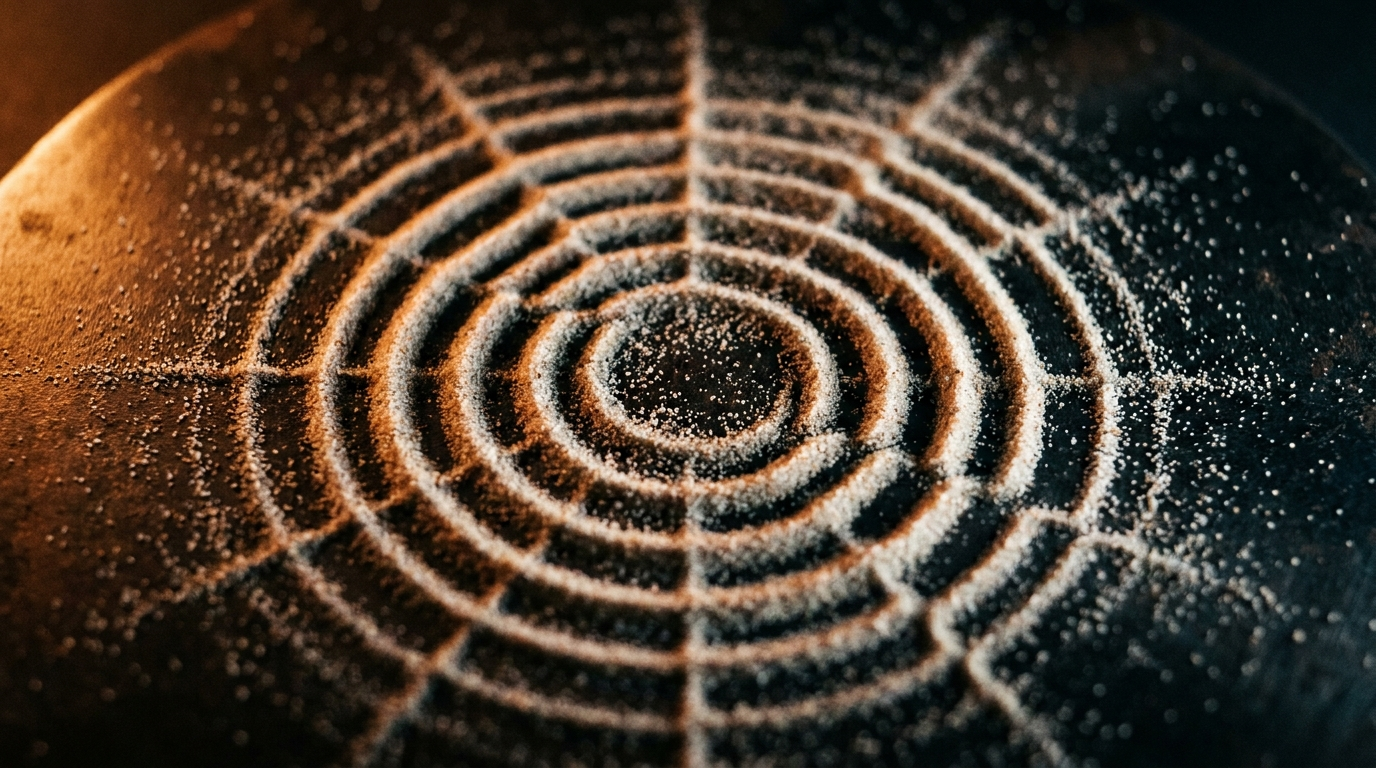
It is worth sitting with what that demonstrates. Sound is not simply something you perceive. It is a physical force that moves matter into order, and it does so predictably enough to reproduce on a bench.
Your body is roughly 70% water, and water carries sound around four times faster than air does. When a bowl is played beside you, or rested on you, that vibration is conducting through tissue rather than travelling to you through the room.
Why the body responds
You are built to receive this
Hearing is one of the first senses to develop in the womb and one of the last to fade at the end of life. Long before you could see, you could hear, and you spent nine months inside the sound of a heartbeat.
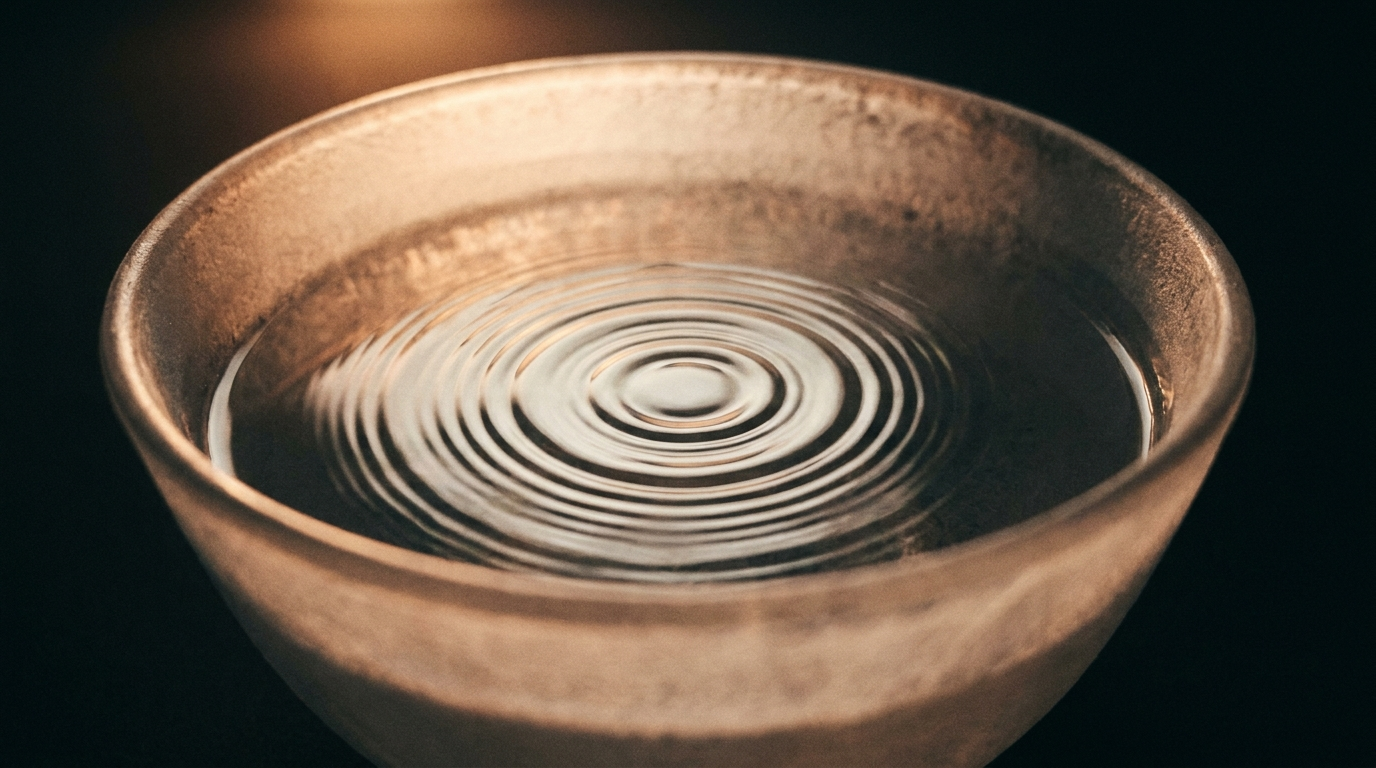
Your ears are not the only route in either. Research published in Nature in 2009 found that we also register the pressure waves of sound through the skin.
There is a chemical layer too. Sound triggers the release of dopamine and oxytocin, the reward chemical and the bonding one. Researchers at Michigan State University found that listening to healing music significantly raised interleukin-1 in the bloodstream while reducing cortisol, the stress hormone.
And a study in the Journal of Evidence-Based Integrative Medicine (Goldsby, 2016) found that exposure to Tibetan singing bowls significantly reduced tension, anger, fatigue, anxiety and depressed mood after a single session.
One honest note on all of this. The evidence base for sound healing is young, most of it is small, and we would rather tell you that than quote it as settled. What is not in question is the mechanism underneath: slow, steady sound moves the autonomic nervous system towards rest.
Vibrational healing
Frequencies, and what they actually do
Everything has a natural resonant frequency. Expose an object to a vibration at or near it, and it resonates. Through resonance, a comparatively weak vibration in one object can produce a strong one in another, and energy transfers between the two until they sync.
That is the principle behind vibrational healing, and it is ordinary physics rather than metaphor.
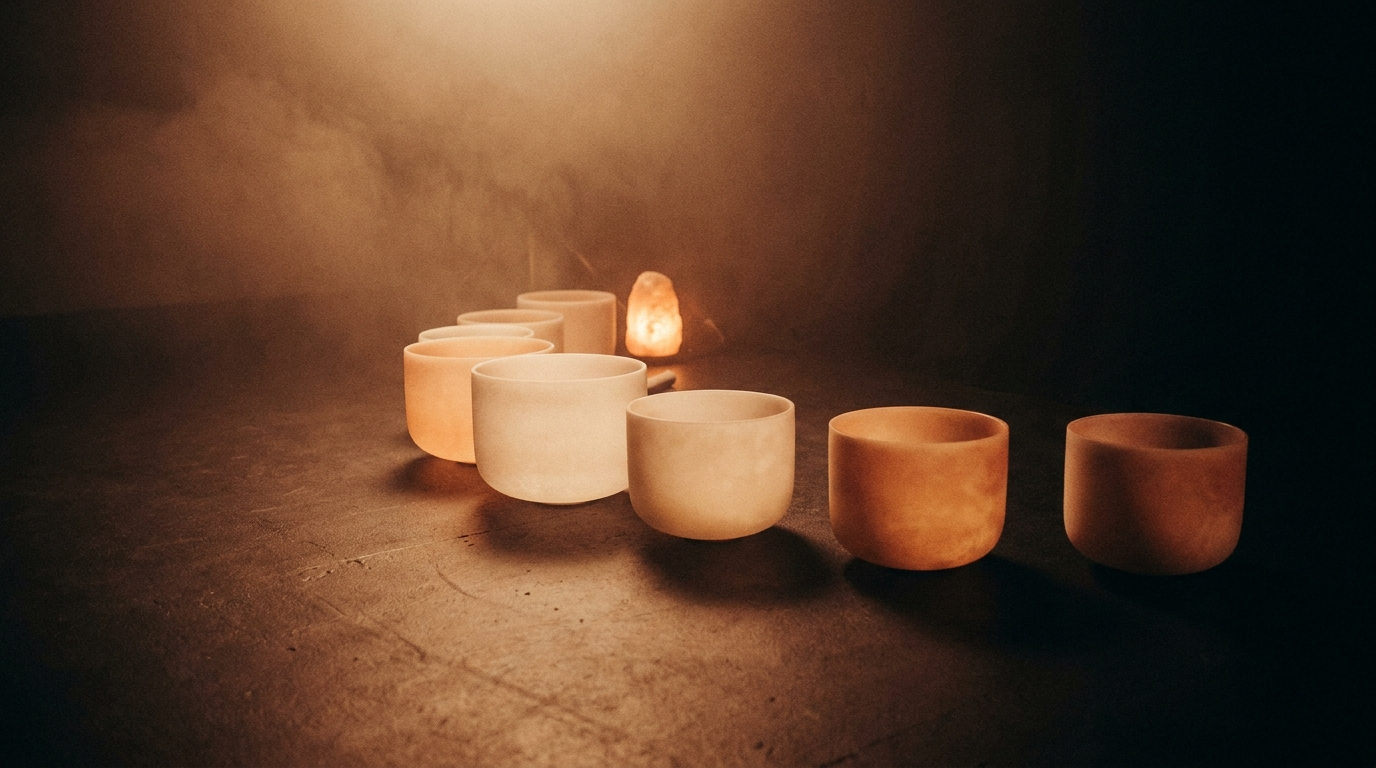
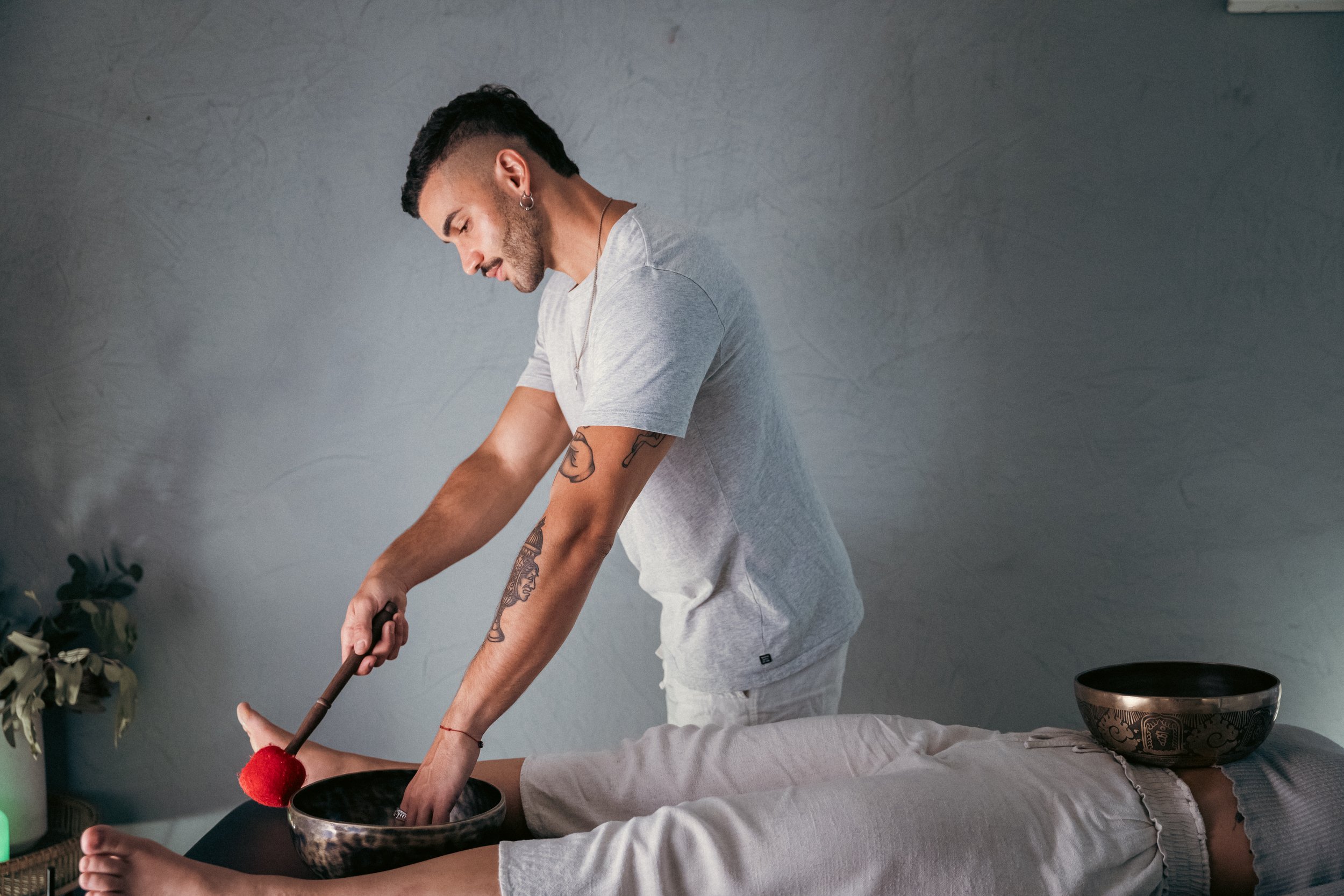
In a session, different instruments occupy different registers. Crystal bowls sit high and clear. Himalayan bowls are lower and more complex. Gongs cover an enormous range at once. Bowls rested on the body send vibration through tissue rather than only through air, which is the part most people do not expect the first time.
You will see specific frequencies quoted in wellness marketing, often with very precise claims attached. We would rather be straight with you: what is well supported is that slow, steady, low sound settles the nervous system. Claims that a particular number cures a particular condition are not something we make.
What to expect
What happens in a session
- You arrive 10 to 15 minutes early. Doors lock 5 minutes after we begin so the room stays undisturbed. Set yourself up on a mat with a bolster and a blanket.
- A short settling in. Usually a few words, sometimes a simple intention. Nothing is demanded of you.
- You lie down and the sound begins. Bowls, chimes and voice move around the room. At points instruments are rested on or near the body.
- You drift. Most people lose track of time. Some fall asleep. Neither is a problem, and both still work.
- You come back slowly. We leave time at the end rather than turning the lights straight on. Tea afterwards if you want it.
Honestly
What it actually feels like
Most people report a heavy, pleasant sinking feeling, as though the mat is holding more of their weight than usual. Time stops behaving normally. Colours or patterns behind the eyes are common. So is falling asleep and waking at the end convinced you missed it, which you did not.
Some people feel emotion arrive from nowhere. Some hear a stomach gurgle across the room, which is someone digestion switching back on after being paused by stress hormones all day.
Afterwards, most people feel calm, loose and slightly spacey, and sleep unusually well that night. A few feel tired or tender the next day, especially after a first session. That is normal too, and we have written about it honestly in sound bath negative effects.
What people come for
What sound healing helps with
- Stress and burnout The core of it. An hour of sustained low frequency moves you out of fight-or-flight and into the state where the body repairs.
- Sleep The most reported effect by a distance. People sleep long and deep the night of a session.
- Anxiety A published study of singing bowl meditation found significant reductions in tension and anxiety after a single session.
- Held physical tension Shoulders, neck, jaw and lower back. Especially in our fascia classes, where the tissue work comes first.
- Overthinking You are not asked to clear your mind. The sound slows it for you, which is why it suits people who cannot meditate.
- Emotional processing Feelings you have been too busy to feel often surface. That is not a side effect, it is much of the point.
Sound healing is not a treatment for medical conditions and we do not present it as one. What it reliably does is change the state your nervous system is running in, and a great deal follows from that.
Rated 4.9 on Google by our Windsor community.
Book a sound bathSuitability
Is sound healing for me?
It suits almost everyone, and it particularly suits people who have tried to meditate and given up. You do not need to be flexible, calm, spiritual or experienced.
Have a word with your doctor, and with us, before booking if you are:
- Pregnant, particularly in the first or third trimester.
- Living with epilepsy or a seizure disorder.
- Fitted with a pacemaker or another implanted device.
- Recovering from recent surgery or managing an acute injury.
- Under care for a serious mental health condition. Sound can surface a lot, and it is better to have support in place first.
Tell us on the way in either way and we will adjust where you lie and how close the instruments come. Nobody has to explain themselves. It is your first session at Sound of Soma Sound Healing Melbourne, and we would rather you were comfortable than stoic.
Where to try it
Sound healing in Melbourne
If you have been searching for sound healing Melbourne, a sound bath near you, or sound therapy in Melbourne, this is what we do. Sound of Soma is a dedicated sound healing studio at 5/1A Windsor Place, Windsor, minutes from Chapel Street and a short walk from Windsor Station.
Not a room hired by the hour. A purpose-built space with the instruments, mats, bolsters and blankets already there, run by practitioners who do this full time. We are one of the few dedicated sound healing studios in Melbourne rather than a venue that hosts the occasional sound bath.
Classes run every day, from $35. There are three ways in, and they suit different bodies.
Which one to book
Three doors into the same room
All three end the same way, with your nervous system somewhere calmer than it started. What differs is how much your body is asked to do on the way there.
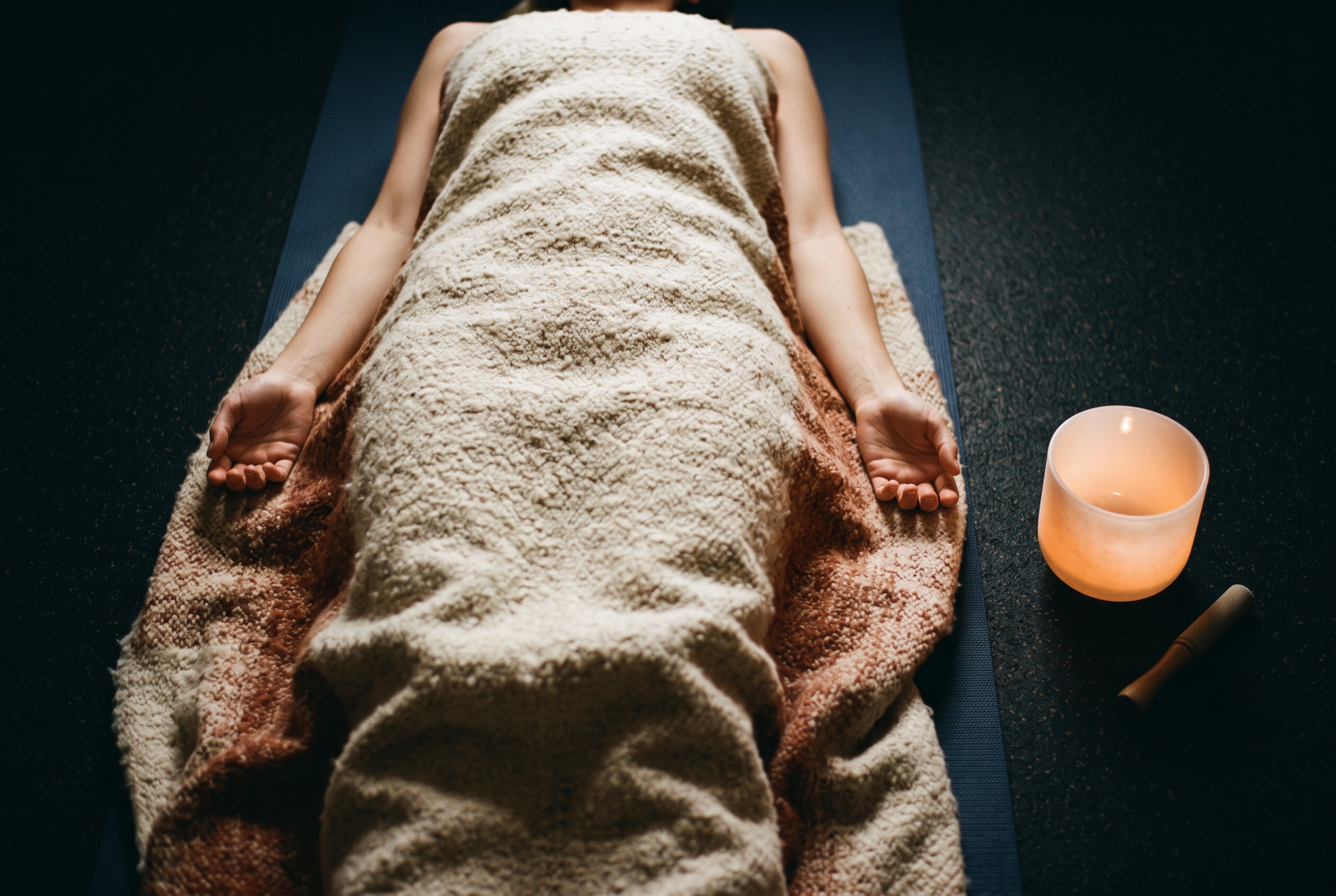 60 min · from $49Sound HealingThe pure sound bathLie down, we play, you rest. Nothing is asked of you for the whole hour.Good for:You cannot switch off at night · You have never done anything like this · You are exhausted rather than tight · You want the easiest possible first sessionSee the class
 60 min · from $40Yin + SoundLong-held shapes, bowls on the bodySupported yin poses held for minutes at a time, with bowls resting on the body.Good for:Your hips and lower back are tight · You sit at a desk all day · You want to move a little, gently · You like yoga but not the pace of itSee the class
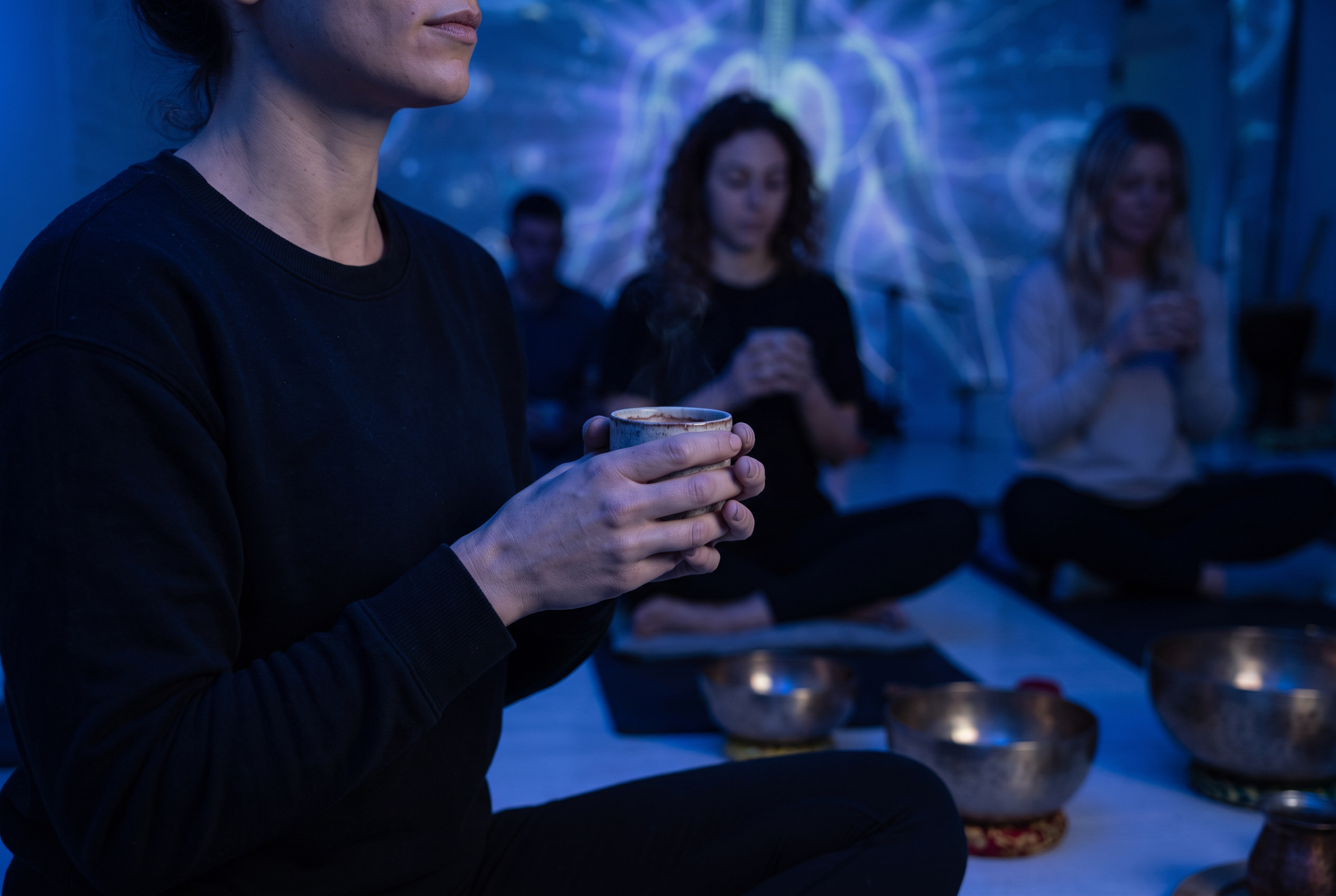 60 min · from $35Fascia + SoundRelease the tissue, then settleGuided fascial maneuvers you do yourself, then sound to lock the release in.Good for:Massage never lasts for you · Neck, jaw and shoulders are permanently tight · You get tension headaches · You want tools to take homeSee the class
Not sure? Start with a sound bath. It asks the least of you and it is the one most people come back to.
See what is on this week in Windsor, Melbourne.
See the timetableKeep learning
We put the short version on Instagram
Most of what is on this page started as a question someone asked us after class. We answer them in short form over on Instagram: what a bowl is actually doing to your body, why you cried in savasana, what to do the day after, and what is on this week.
Everything people ask
Sound healing FAQs
What is sound healing in simple terms?
Instruments like crystal and Himalayan singing bowls, chimes and voice are played around you while you lie down. The vibration slows your breathing and heart rate and moves your nervous system out of stress mode. You do nothing. The sound does the work.
What is the difference between a sound bath and sound healing?
Sound healing is the practice as a whole. A sound bath is the most common format of it: a group class where you lie down and are bathed in sound for an hour. Every sound bath is sound healing, but sound healing also covers one-to-one sessions and targeted frequency work.
Is a sound bath the same as meditation?
Sound bath meditation has the same destination as seated meditation, by a much easier route. Meditation asks you to direct your attention. A sound bath gives your brain an external rhythm to follow, so it settles without effort. This is why people who say they cannot meditate often do well in a sound bath.
Do I need any experience?
None. Most of the room is new. You lie down under a blanket with your eyes shut, and that is the whole ask. Nothing is demonstrated quickly and there is nothing to keep up with.
What should I wear and bring?
Something warm and comfortable. Your body temperature drops as you settle. Mats, bolsters, blankets and eye pillows are all provided, so bring yourself and a water bottle.
How long does a sound bath last?
Most of our classes run 60 minutes. Some, like the full moon sessions and our fascia and frequency class, run 90 minutes to two hours.
Is sound healing scientifically proven?
The evidence base is young but not empty. Published research links singing bowl meditation to reduced tension, anger, fatigue and anxiety, and music more broadly to lowered cortisol. What is well established is the underlying mechanism: slow, steady sound shifts the autonomic nervous system towards its rest state.
Can sound healing make you feel worse?
Occasionally, briefly. Some people feel tired, emotional or achy the day after a first session. It is common and short-lived, and we have written a full honest guide to it.
How often should I come?
Once is genuinely worth doing. Weekly is where people notice things change, because the nervous system stops storing up so much between sessions.
Is there anyone who should not do it?
Have a word with your doctor first if you are pregnant, particularly in the first or third trimester, or if you live with epilepsy, have a pacemaker, are recovering from surgery, or are under care for a serious mental health condition.
Reading about it only goes so far
The only way to know is to lie down
Sound healing, yin and sound, and fascia release classes every day from our studio in Windsor, Melbourne. Everything is provided and no experience is needed for any of them.
Ange

5/1A Windsor Place
Windsor, Melbourne VIC 3181
info@soundofsoma.com.au0489 089 049
Text only. We cannot receive phone calls, so send a message and we will respond as soon as we can.
Use Google Maps, not Apple Maps. Windsor Place is a small lane off Chapel Street, enter via 32 Chapel Street.
Class times change week to week, so check the live timetable before you come.
Sound of Soma acknowledges the Traditional Custodians of Country throughout Australia and their connections to land, sea and community. We pay our respect to their Elders past, present and emerging, and extend that respect to all Aboriginal and Torres Strait Islander peoples today.