The difference, properly explained
Sound bath vs meditation: what is the difference?
One asks you to direct your attention. The other holds it for you. Why that distinction decides which one will work for you, and why most people are handed the wrong one first.
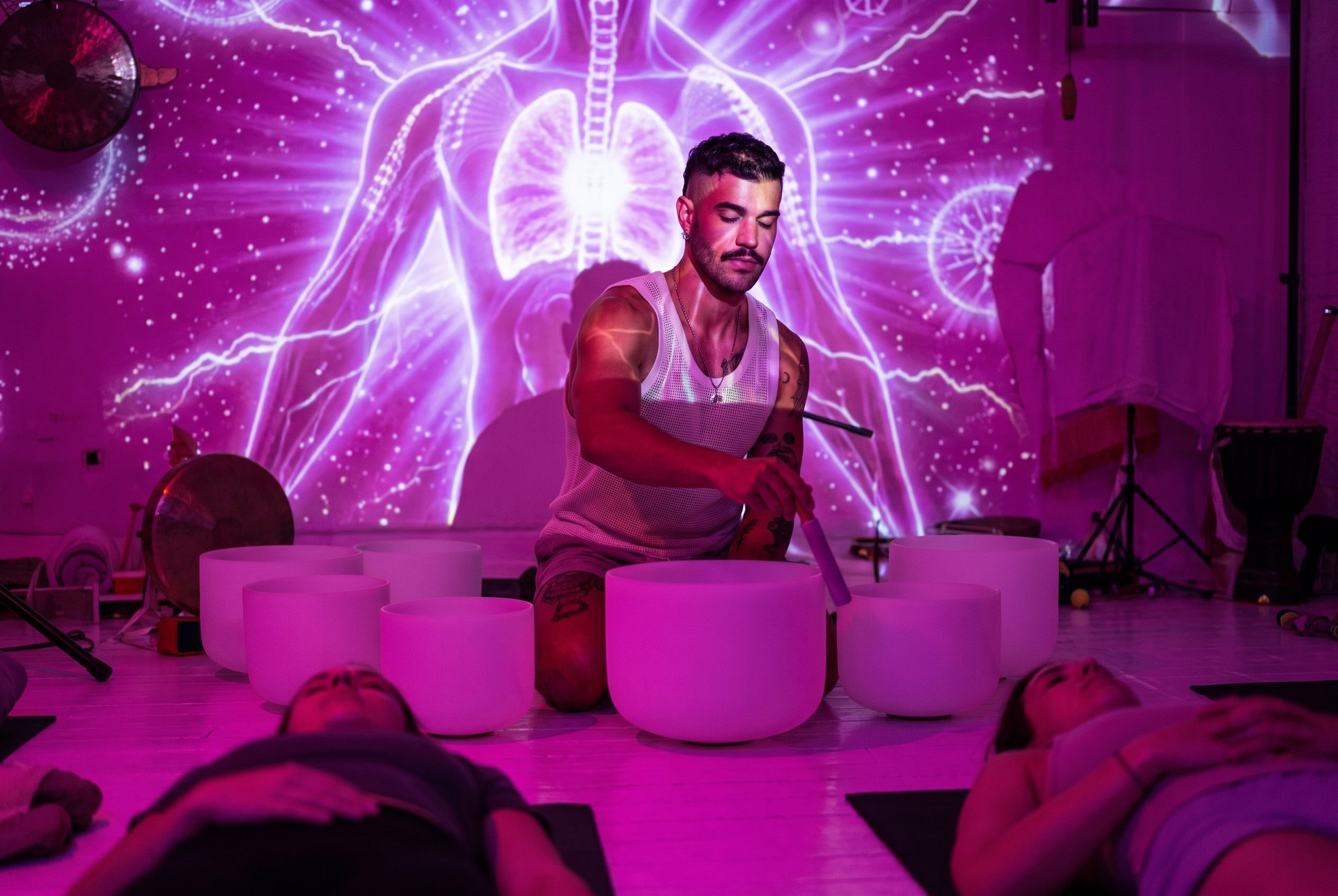
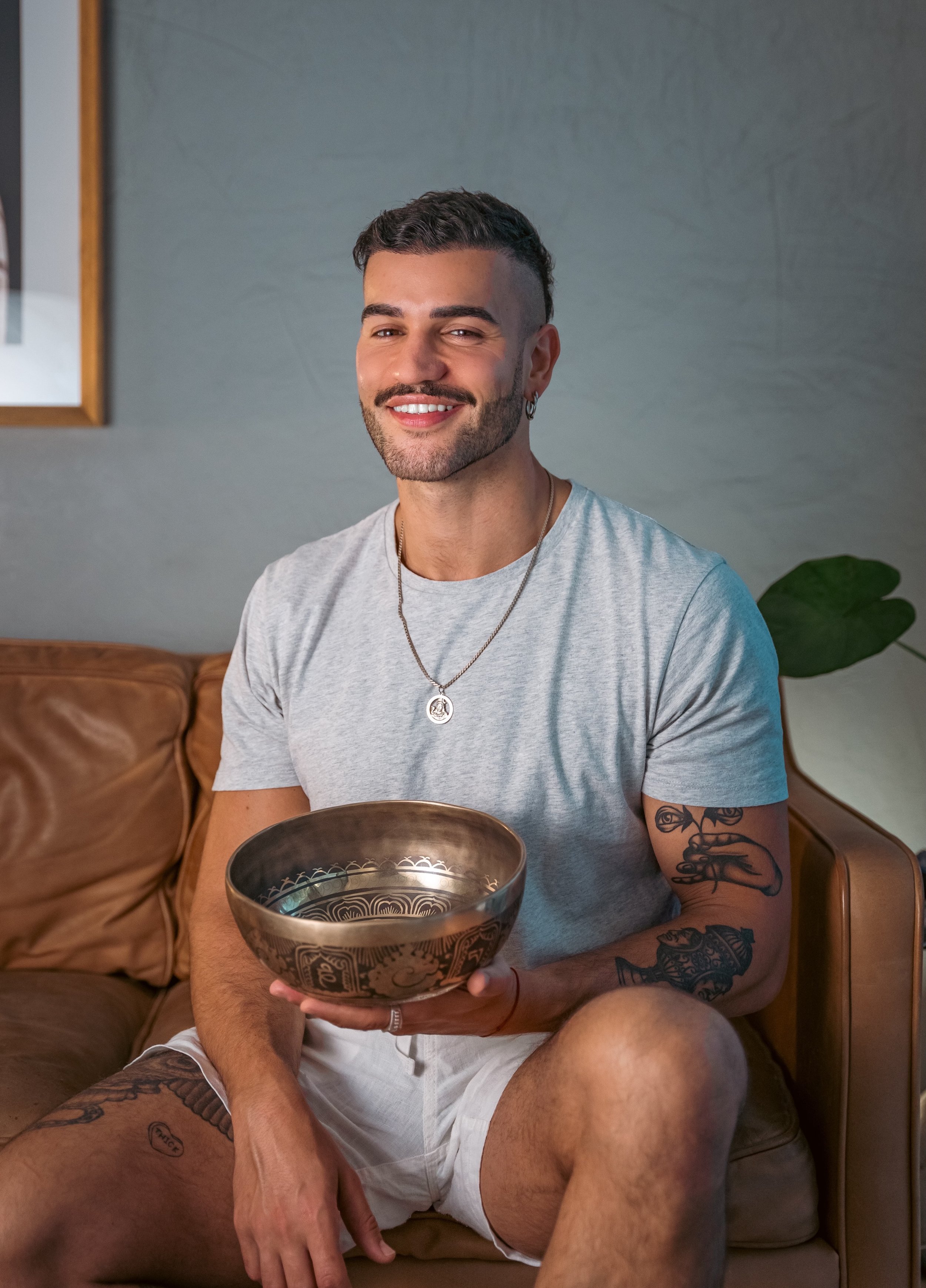 Written by Ange MonittoFounder, Sound of Soma · Windsor, MelbourneAnge spent years failing at meditation before sound healing worked, and later found out why. Read his story.
If you only read one bit
The difference in one sentence
Meditation asks you to direct your attention. A sound bath holds it for you.
That is the whole thing. Everything below is why it matters so much more than it sounds.
In meditation, you are the instrument. You place your attention on the breath, notice it has wandered, and bring it back. The practice is that returning, over and over. It is genuinely brilliant and for a lot of people it works.
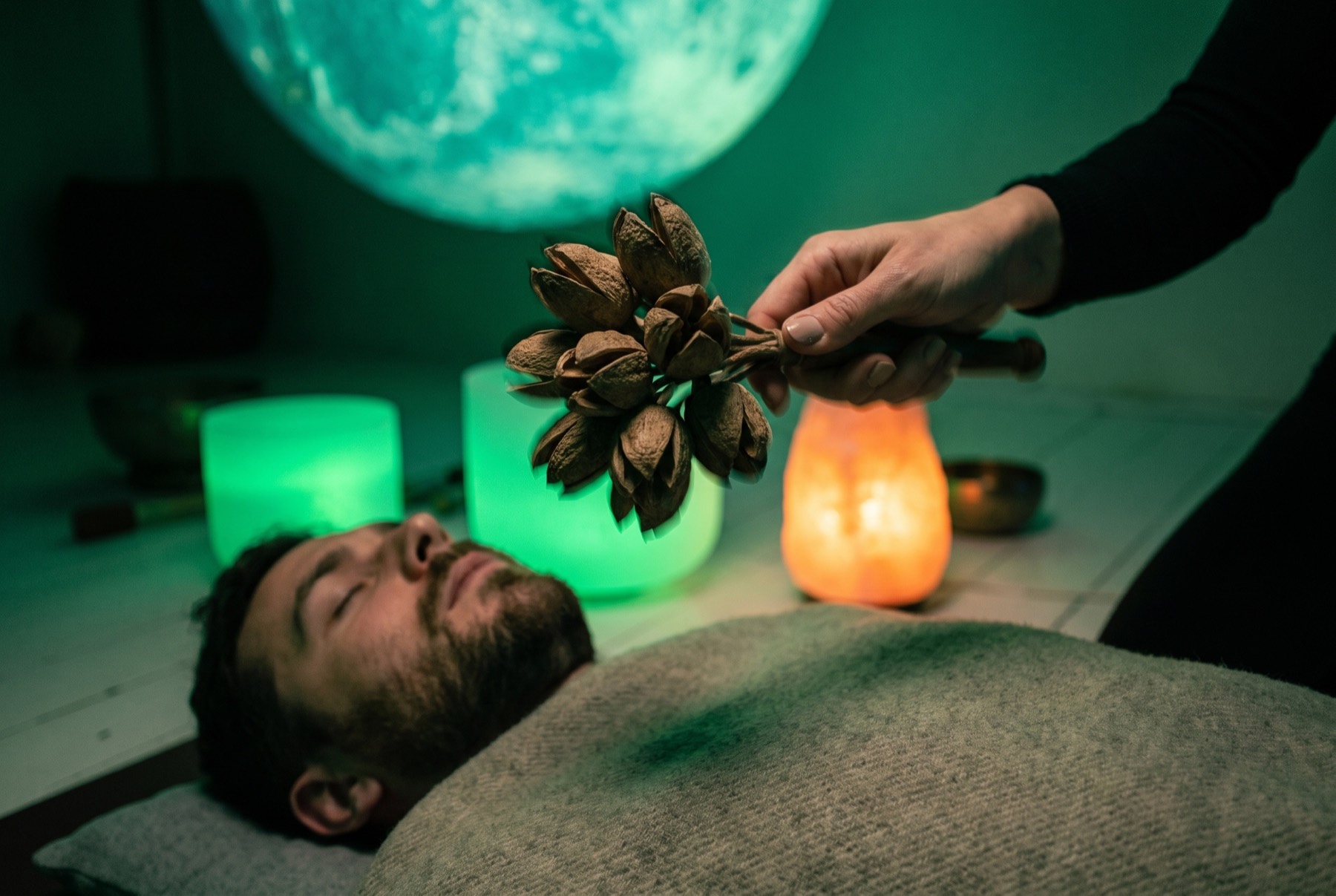
In a sound bath you are not doing any of that. You lie down and instruments are played around you. There is nothing to focus on, nothing to return to and nothing to be bad at. The sound arrives from outside and your system follows it because that is what nervous systems do with slow, steady, unthreatening input.
Useful to know
Meditation is not one thing
When someone says "I tried meditation and it did not work", they almost always mean they tried one kind. There are at least six, and they are wildly different experiences.
- Focused attention. Pick a target, usually the breath, and keep returning to it. This is the default. It is what every app opens with, and it is the one most people fail at.
- Open monitoring. Notice whatever arises without following it. Harder than it sounds and genuinely not for everyone, particularly with unprocessed trauma.
- Body scan. Move attention slowly through the body. Physical rather than mental, and usually much more accessible.
- Visualisation. Build an image and hold it. Suits people who think in pictures.
- Compassion practice. Loving-kindness and similar. Aimed at how you relate to others and to yourself.
- Informal practice. Attention brought to washing up, walking, eating. No cushion involved.
A sound bath sits closest to body scan, with one significant difference: you are not directing the attention through your body. Vibration is doing it for you.
The real distinction
Effort and receiving
Forget the labels for a second. Almost every calming practice sits somewhere on one line: how much are you being asked to do?
- High effort. Focused attention meditation, breath counting, mantra. You are working. Excellent training, and if you are already depleted it is one more demand on a system with nothing left.
- Middle. Body scan, yoga nidra, gentle movement. Structured, but you are following rather than generating.
- Receiving. Sound baths, vibration on the body, a hand on your back. Nothing is asked. The stimulus comes from outside and your job is to be there.
When you are exhausted, go down the list rather than up it. Almost everybody does the opposite. They feel terrible, they conclude they should be more disciplined, they choose the hardest practice, they fail at it, and they add that failure to the pile.
Discipline is not the missing ingredient when your nervous system has been running hot for two years.
Rarely mentioned
Meditation is not risk free
The wellness industry presents meditation as universally good, and mostly it is. It is also not nothing, and being honest about that is more useful than pretending.
In a study of over 1,200 regular meditators published in PLOS ONE, around a quarter reported having had an unpleasant meditation-related experience. Anxiety, distressing thoughts, a sense of detachment from themselves. It was more common with longer practice and silent retreats.
That does not mean do not meditate. It means if sitting in silence with your own mind has made you feel worse rather than better, you were not doing it wrong and you are not unusual. There are gentler doors in.
If you live with trauma, dissociation or a psychotic illness, it is worth choosing a practice with a professional rather than an app. Body-based and externally-anchored practices are generally the gentler starting point, and a sound bath is one of them.
Practical
Which one is right for you
- You can sit and follow your breath and feel better afterwards. Keep meditating. It is free, portable and effective. Come to a sound bath occasionally for the depth.
- Your mind races the whole time and you finish annoyed. Stop doing focused attention. Go to the receiving end. Sound baths, yin, body-based practice.
- You fall asleep every time. You are exhausted rather than bad at meditating. Sleep first, and use sound rather than silence in the meantime.
- Sitting still makes you agitated. Movement first, stillness second. That is exactly why our Nervous System Reset opens with somatic tools and movement before anyone lies down.
- You have ADHD or suspect you do. ADHD brains often do better with more external input rather than less, which is exactly what sound gives you.
Not a competition
Most people end up doing both
If sleep is what you are really after, read sound baths for sleep and anxiety. The pattern we see constantly: someone comes to sound baths because meditation never worked. Six months later they are meditating at home.
The reason is simple. You cannot get somewhere you have never been. If you have no felt sense of what a settled nervous system is like, you have nothing to aim at, and sitting in silence is just sitting in silence. An hour of sound gives you the destination. After that, the practice at home has a target.
Used that way they are not alternatives at all. One is the experience and the other is the practice, and having both is better than arguing about which is superior.
If meditation has never landed for you, start at the receiving end.
See the Sound BathWhere to start
What we actually run
- Sound Bath · 60 or 90 min The easiest door. You lie down under a blanket and the sound does the rest. No experience, no effort.
- Nervous System Reset Somatic tools and gentle movement first, then the sound. The one to book if you arrive wired.
- Yin + Sound Long supported shapes with Tibetan bowls resting on the body. Part deep stretch, part vibration massage.
- Private sessions Energy field reading, frequency and vibration work, one to one with Ange.
All at 5/1A Windsor Place, Windsor, ten minutes from the CBD. Mats, bolsters and blankets provided. See this week's timetable and prices.
Not sure which one? Start with a Sound Bath. It asks nothing of you.
See the Sound BathThe rest of it
Sound healing and meditation questions
Is a sound bath a form of meditation?
Loosely, yes. It belongs to the same family, but it sits at the receptive end of it. Most meditation asks you to do something with your attention. A sound bath gives your attention something to rest on so you do not have to.
Which is better, sound healing or meditation?
Neither. They are different tools. If you can sit and follow your breath and it leaves you calmer, keep doing it, it is free and it works. If you have tried repeatedly and it leaves you frustrated, the receptive end of the spectrum is where to look next.
Can sound healing replace a meditation practice?
It can be the way in for people who could never build one. Plenty of people start with sound baths and end up meditating at home a year later, because they finally know what the state feels like.
Why do I fall asleep in a sound bath but not in meditation?
Because meditation keeps a small amount of effort running, and effort keeps you awake. When that effort is removed and something external takes over, a tired nervous system does the obvious thing.
Do I need to empty my mind?
No, and nobody ever has. That instruction has probably put more people off meditation than any other. Thoughts continue. You are just not chasing them.
Is meditation ever a bad idea?
Occasionally, and it is under-discussed. In a survey of over 1,200 regular meditators, around a quarter reported an unpleasant meditation-related experience at some point. It is more likely with long silent retreats and with unprocessed trauma. Worth knowing, not worth being frightened by.
What if I want the benefits but cannot get to a class?
Start with breath and humming rather than silent sitting. We wrote up seven of them in seven ways to regulate your nervous system, and they cost nothing.
The receiving end
Come and find out what settled feels like
You cannot aim at a state you have never been in. An hour of sound gives you the destination, and everything you try at home afterwards has something to aim for.
Ange

5/1A Windsor Place
Windsor, Melbourne VIC 3181
info@soundofsoma.com.au0489 089 049
Text only. We cannot receive phone calls, so send a message and we will respond as soon as we can.
Use Google Maps, not Apple Maps. Windsor Place is a small lane off Chapel Street, enter via 32 Chapel Street.
Class times change week to week, so check the live timetable before you come.
Sound of Soma acknowledges the Traditional Custodians of Country throughout Australia and their connections to land, sea and community. We pay our respect to their Elders past, present and emerging, and extend that respect to all Aboriginal and Torres Strait Islander peoples today.
Nominated
Healer of the Year
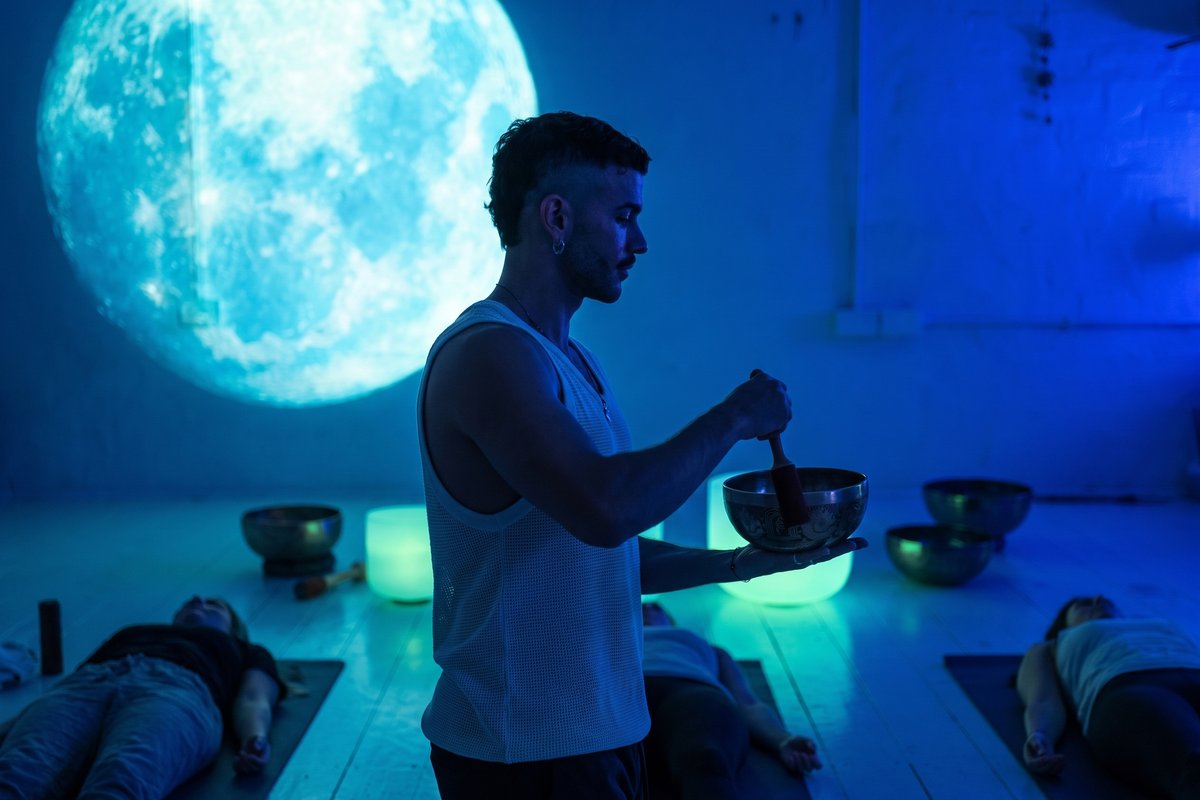
Ange is up for Sound & Energy Healer of the Year 2026, decided entirely by public vote. It’s free, takes ten seconds, and you can vote once a day, every day, until 8 November.
Voting is open now
Vote for Ange Why the daily vote matters