Sleep · Anxiety · Windsor, Melbourne
Sound baths for sleep and anxiety
Why so many people sleep deeply after a sound bath, what the research does and does not say, and how to use it when your mind will not switch off.
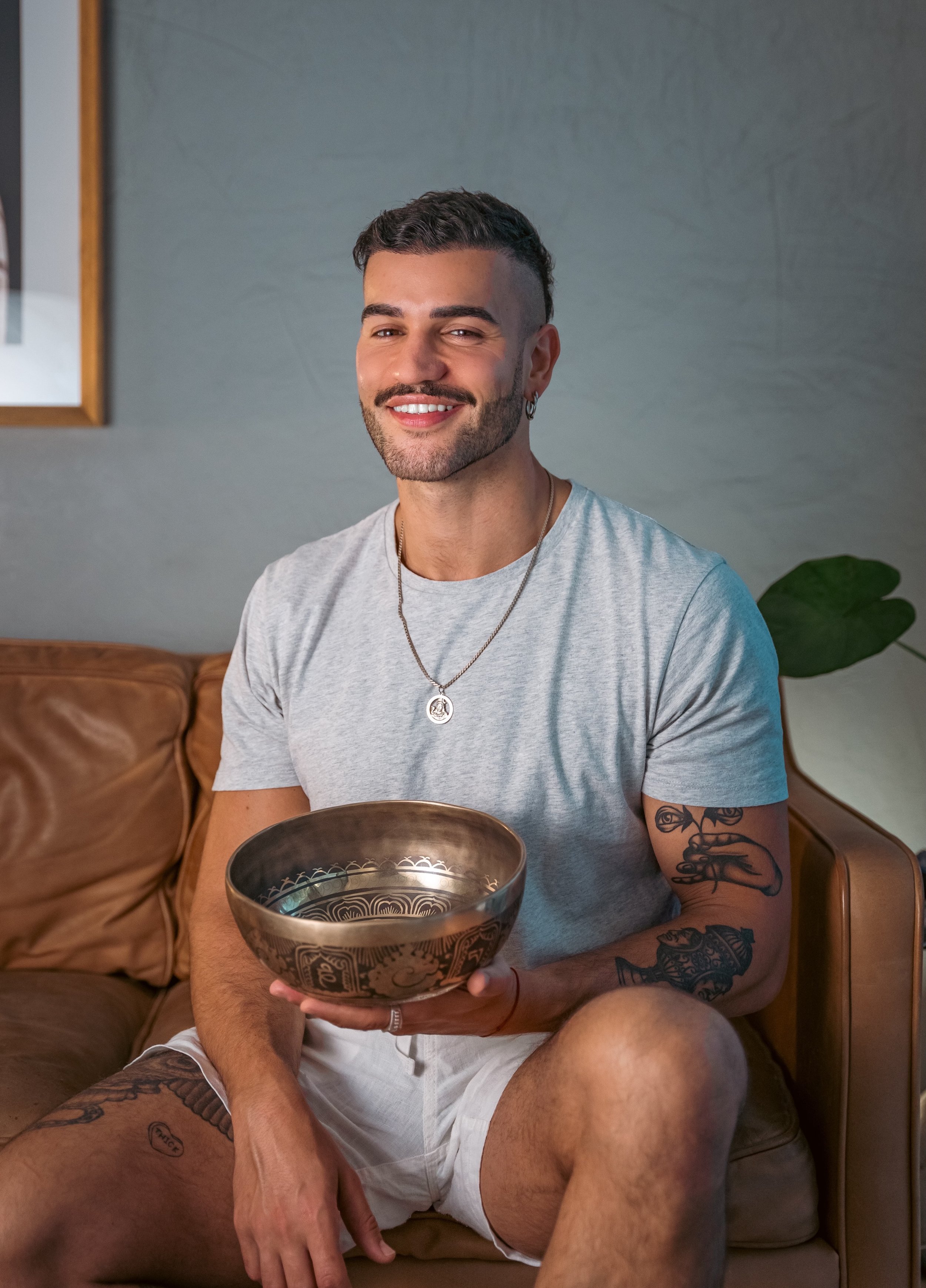 Written by Ange MonittoFounder, Sound of Soma · Windsor, MelbourneAnge lived with anxiety for years. His first sound bath was the first time in months it eased. Read his story.
What people tell us
The thing people mention most
Ask anyone who has been to a few sound baths what changed, and the first answer is nearly always the same: "I slept properly that night."
The second most common answer is about the noise in their head. Not that it disappeared, but that for an hour it had something else to follow, and it got quieter.
Those two things are connected. A mind that will not switch off at night and a body that cannot settle are usually the same problem showing up in two places. This article is about why sound helps with both, what the evidence actually says, and how to use it well.
Under the hood
What is happening in your body
When you are stressed, your nervous system runs the fight or flight side of itself: faster heart rate, shallow breathing, muscles braced, mind scanning for the next problem. It is meant to switch off when the problem passes. For a lot of people, it stops switching off.
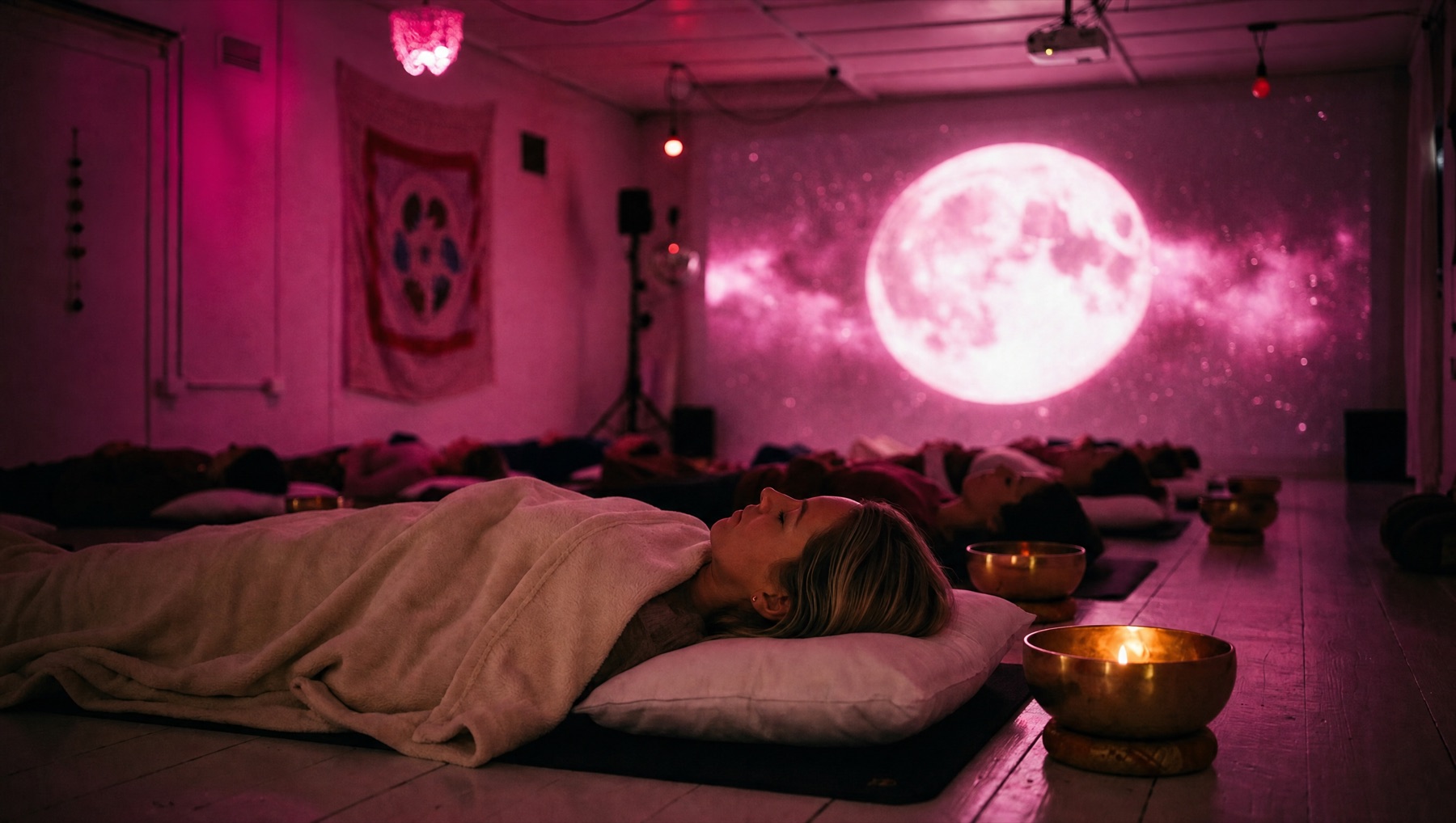
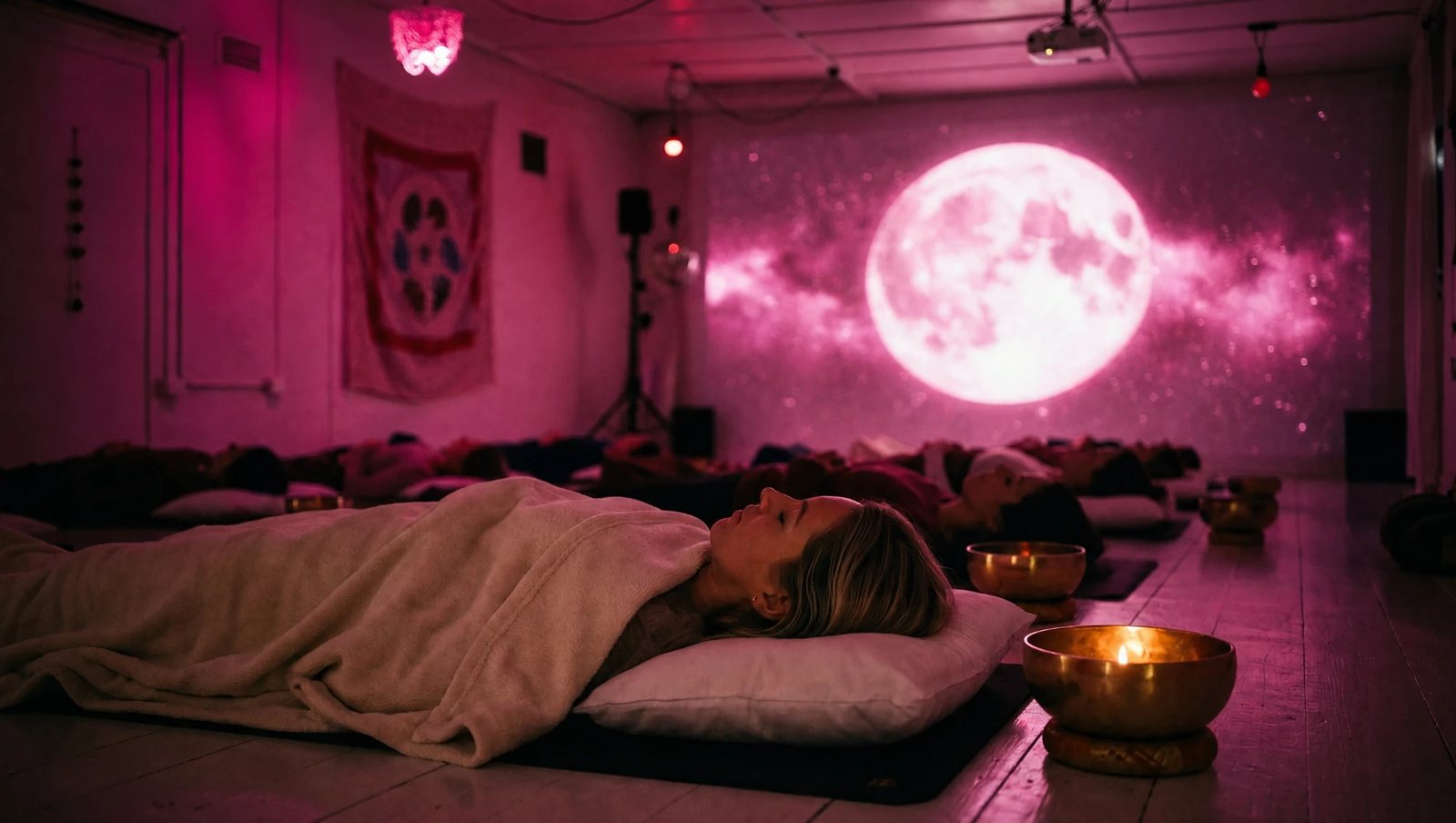
Lying still in a dark room with slow, steady, unthreatening sound is associated with the opposite state, the rest and repair side. Breathing tends to slow and lengthen, muscles soften, and attention moves from thinking to sensing.
The sound also does a job meditation asks you to do yourself. Instead of holding your attention on your breath, the instruments hold it for you. That is why people who cannot meditate often drop straight into a sound bath. We wrote a whole piece on sound bath vs meditation if you want the detail.
Honest about the evidence
What the research says
There is less research on sound baths than the wellness industry implies, so here is the honest version.
- A 2017 study of 62 adults (Goldsby and colleagues, Journal of Evidence-Based Complementary and Alternative Medicine) found a single singing bowl session was associated with significantly lower tension, anger, fatigue and depressed mood afterwards. People who had never tried it before reported the biggest drop in tension.
- A 2020 systematic review of singing bowl studies (Stanhope and Weinstein, Complementary Therapies in Medicine) found the results promising, and the studies mostly small and without control groups.
So: early, encouraging, and not yet the kind of evidence a medication has. We would rather tell you that than overpromise. What we can say is what we see every week in the room, and what people report back.
Practical
Using it for sleep
- Book an evening class. The effect people feel most is that night's sleep. Go home and keep the evening quiet, rather than going straight back to a laptop.
- Protect the hour afterwards. Screens down, lights low, something warm to drink. You are extending the state you are already in.
- Come weekly for a while. One class is a good night. Weekly over a month or two is where people tell us their baseline starts to shift.
- Falling asleep in class is fine. It is one of the most common things that happens, and you still get the benefit.
Practical
Using it for anxiety
If you live with anxiety, lying still in a dark room with strangers can sound like the last thing you want. A few things make it easier:
- Tell us at the door. Quietly. We will set you up near the door and check in with you.
- Keep your eyes open if you want to. Nothing requires them closed.
- You can leave at any point. Nobody will stop you or ask about it.
- Try movement first if stillness feels impossible. Our Nervous System Reset class opens with regulation tools and gentle movement before anyone lies down. For a wired system that order matters.
It is also normal for emotion to come up, and occasionally for someone to feel more unsettled before they feel better. That passes, and our article on sound bath negative effects covers it honestly.
The easiest way to find out what it does for your sleep is one evening class.
See the Sound BathImportant
Alongside care, never instead of it
If you have an anxiety disorder, panic attacks, or sleep problems that have gone on for months, please talk to your GP or psychologist as well. A sound bath can sit alongside treatment. It is not a replacement for it, and you should never stop medication without talking to the person who prescribed it.
Between classes
What to do at home
You do not need an instrument to use some of this at home. A long, slow exhale, humming on the out breath, and lying with your legs up the wall for ten minutes before bed are all simple ways to nudge your system towards rest. We wrote up seven of them in seven ways to regulate your nervous system. They cost nothing.
Where to start
What we actually run
- Sound Bath · 60 or 90 min The easiest door. You lie down under a blanket and the sound does the rest. No experience, no effort.
- Nervous System Reset Somatic tools and gentle movement first, then the sound. The one to book if you arrive wired.
- Yin + Sound Long supported shapes with Tibetan bowls resting on the body. Part deep stretch, part vibration massage.
- Private sessions Energy field reading, frequency and vibration work, one to one with Ange.
All at 5/1A Windsor Place, Windsor, ten minutes from the CBD. Mats, bolsters and blankets provided. See this week's timetable and prices.
Not sure which one? Start with a Sound Bath. It asks nothing of you.
See the Sound BathKeep reading
More from the journal
The rest of it
Your questions
Will a sound bath help me sleep?
Better sleep that night is the effect people report most often after a sound bath. It is not guaranteed, and one class is not a fix for long-term insomnia, but it is a very common experience.
What time of day is best for sleep?
An evening class, followed by a quiet evening at home. The calm and heaviness people feel afterwards carries straight into the night if you protect it.
Can a sound bath help with anxiety?
Research on singing bowl sessions has found them associated with lower tension and better mood straight afterwards, though the studies are small. Many people with anxiety find it easier than meditation, because the sound holds their attention for them.
Can a sound bath make anxiety worse?
Occasionally people feel emotional or unsettled during or after a session, usually briefly. Tell us at the door if you are anxious, sit near the exit, keep your eyes open if you like, and leave whenever you need to.
How often should I come?
Weekly is where most people notice a lasting difference. One class shows you what it feels like. A month or two of regular classes is where people tell us their sleep and baseline start to change.
Is it okay if I fall asleep?
Completely. It happens to a lot of people and you still benefit.
Does it replace therapy or medication?
No. It can sit alongside treatment, never instead of it. If anxiety or insomnia has gone on for a long time, please see your GP as well.
One evening
See what it does for your sleep
Book an evening class, keep the night quiet afterwards, and notice how you sleep. That tells you more than any article.
Ange

5/1A Windsor Place
Windsor, Melbourne VIC 3181
info@soundofsoma.com.au0489 089 049
Text only. We cannot receive phone calls, so send a message and we will respond as soon as we can.
Use Google Maps, not Apple Maps. Windsor Place is a small lane off Chapel Street, enter via 32 Chapel Street.
Class times change week to week, so check the live timetable before you come.
Sound of Soma acknowledges the Traditional Custodians of Country throughout Australia and their connections to land, sea and community. We pay our respect to their Elders past, present and emerging, and extend that respect to all Aboriginal and Torres Strait Islander peoples today.
Nominated
Healer of the Year
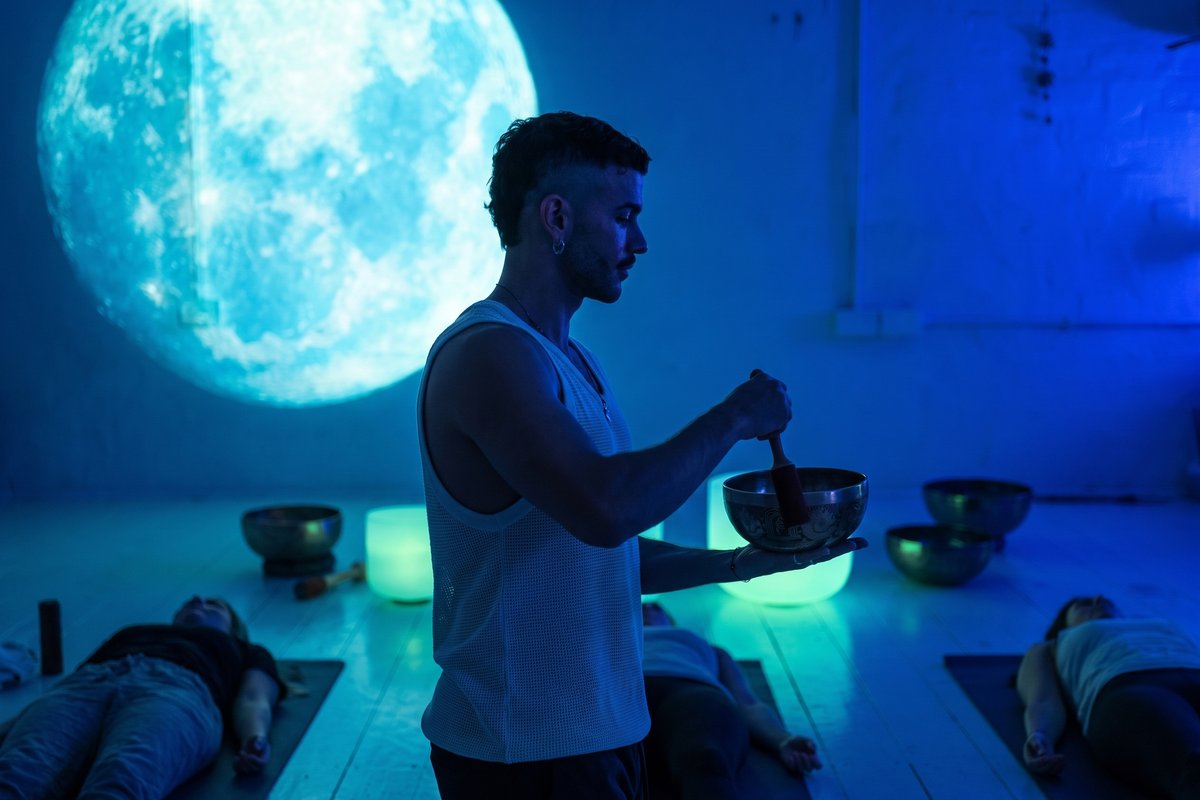
Ange is up for Sound & Energy Healer of the Year 2026, decided entirely by public vote. It’s free, takes ten seconds, and you can vote once a day, every day, until 8 November.
Voting is open now
Vote for Ange Why the daily vote matters